
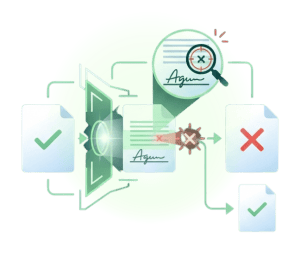





Verdikt
AI document forgery detection for banks, NBFCs and insurers, with tampered regions highlighted on the document as evidence
Trusted by leading brands for over a decade


Verdikt checks PDFs and images for tampering with seven independent forensic methods.
Every verdict is explainable, with findings per check. Use it through a REST API, an annotated reviewer portal or folder-scale batch processing.
Catch Forged Documents Before Anyone Acts on Them
Features:
Seven Forensic Methods, One Pass
Deep learning, metadata and revision forensics, error-level and copy-move analysis, OCR cross-checks and content screens run independently. A forger must beat all seven.
Cryptographic ID Checks
Validates Aadhaar Secure-QR signatures against issuing-authority certificates and GSTIN check digits, for deterministic pass-or-fail answers.
Explainable Verdicts
Tampered regions are drawn on the document, with per-check findings and plain-language advisories.
Fail-Closed by Design
Verdikt never clears a document it could not fully examine. Degraded cases go to human review with the reason stated, so nothing slips through as authentic.
Use Cases:

Loan Documents
Screen salary slips, bank statements and income proofs for metadata anomalies, inserted text and hidden overlaps before underwriting.

Insurance Claims
Catch altered amounts, edited vendor details and tampered invoices or medical bills before a claim is paid out.

KYC Documents
Check identity documents and scanned submissions for tampering, AI generation and Aadhaar Secure-QR mismatches before onboarding.

Trade Invoices
Spot editing-tool traces and font mismatches on invoices and shipping papers that were partly rebuilt, across high-volume trade finance flows.
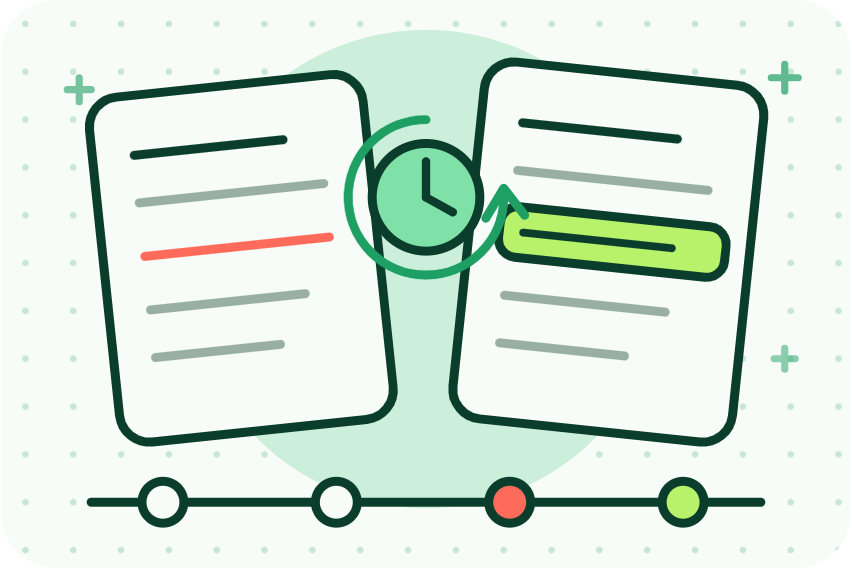
Disputes & Audits
Reveal backdated PDFs and post-save edits through modification history and revision diffs, so reviewers can challenge documents in disputes and audits.

Industries Served
Banking & NBFC
Pre-Underwriting Screen: Flags tampered salary slips and statements before underwriting.
- Prevention of Identity Misuse: Prevents unauthorized use of Aadhaar documents through compliant masking.
Evidence for Reviewers: Highlighted regions show what changed and where.
Insurance
- Altered Amounts: Detects edited totals and vendor details on invoices and medical bills.
- Claims Triage: Suspicious claims are flagged for review before payout is processed.
- Audit-Ready Findings: Per-check findings support investigators and audits.
Compliance
- KYC Validation: Runs error-level analysis on scans and screens images for AI generation.
- Signed Data Match: Compares printed text with Aadhaar Secure-QR data.
- Hashed Audit Trails: Every document verdict outcome is recorded for later review.
Trade Finance
- Invoice Checks: Finds editing-tool traces and font mismatches on invoices and shipping papers.
- GSTIN Validation: Checks GSTIN check digits so invalid numbers are caught at once.
- Built for Volume: Folder-scale batch processing handles large document sets.
See Verdikt Catch a Forged Document Live
How does Verdikt detect forged or tampered documents?
It runs seven independent checks: deep-learning tamper localization, Aadhaar Secure-QR and checksum validation, metadata and revision forensics, OCR cross-checks, image forensics and content screens.
Which documents and formats does Verdikt support?
Digital PDFs, scanned PDFs and images, each routed through its own analysis pipeline. Typical documents are salary slips, bank statements, invoices, medical bills, identity documents and shipping papers.
How do we integrate Verdikt with our existing workflow?
Three ways: a REST API returning structured JSON with risk score and flags, an annotated reviewer web portal, and folder-scale batch processing. Deployment is cloud-agnostic, with hashed audit trails.